
White Bear Lake, MN · Garage Door Service
Weather Seals and Drafts on White Bear Lake Garage Doors
Most White Bear Lake garages date to the 1960s-70s building boom, and original seals weren't built for this area's severe cold. Here's what to check before winter.
- Repairs & new doors
- Springs & openers
- Serving 7 nearby communities
When to Get Help
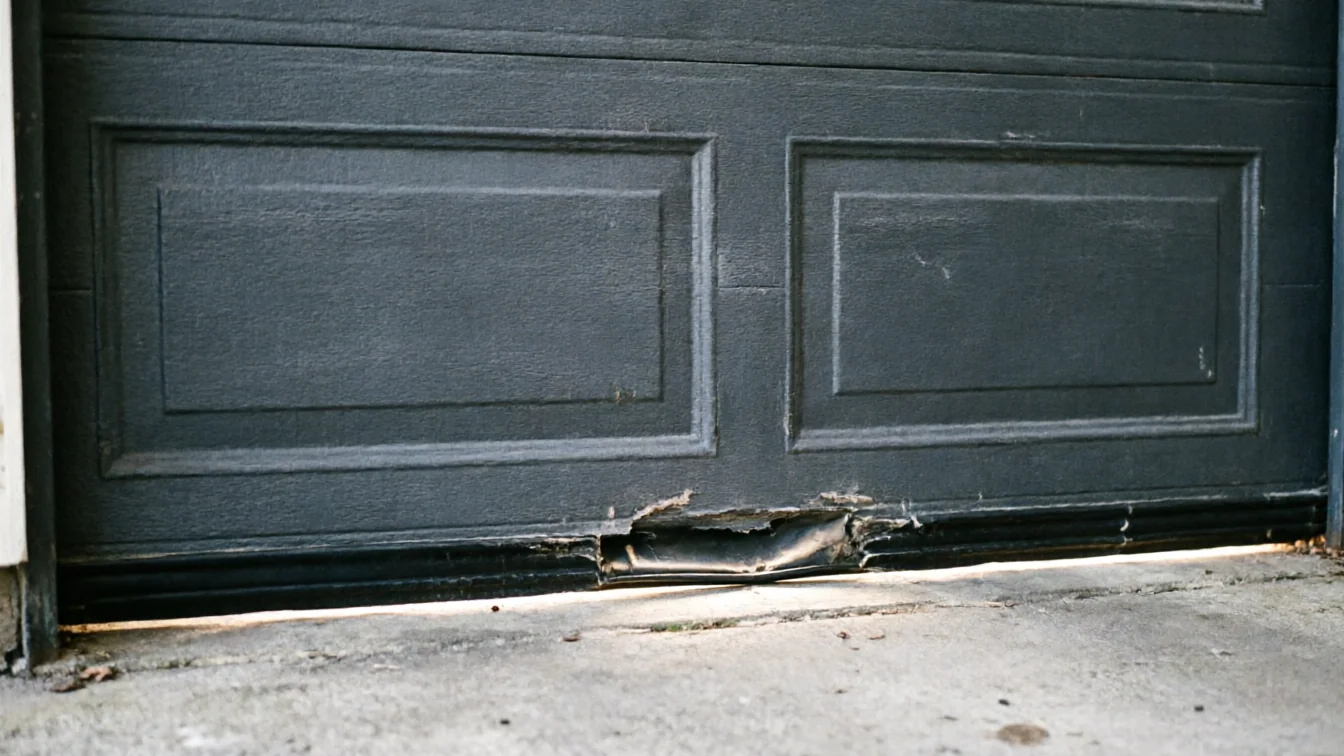
If you can see daylight along the bottom of your door, or you feel a steady draft across the garage floor on a cold morning, the seal has given out and it's not coming back with a shot of lubricant. Call sooner rather than later if the gap is uneven along the bottom edge, because that usually means the track or the slab has shifted, not just the rubber. Across this service area most houses were built between 1950 and 2002, with the bulk of the stock going up in the 1960s and 70s, so a lot of garages are carrying their second or third seal by now and the track hardware underneath is original. If your door still closes square and the opener still reverses properly, a seal swap is a straightforward job. If the door is dragging, racking, or won't seat evenly no matter how you adjust the track, that's past a seal problem and worth a second look before you spend money on rubber that won't fix it.
The Problem
A garage built in the 1960s or 70s typically used a thin vinyl or rubber bottom seal set into a simple aluminum retainer, and that retainer wasn't sized for the stiffer, thicker seal profiles sold today. So even a correctly installed modern replacement can sit slightly proud or slightly short, leaving a thin gap at the corners where the slab has settled over fifty-plus years. Side and top seals (the flexible strip the door closes against along the jamb) fare worse, because most houses of this era never had them at all - they were added later, if ever, and often nailed up without real attention to fit. The result is a door that looks sealed from across the garage but leaks air at the corners and along the top rail, which is exactly where you feel it standing next to a cold car on a January morning. None of this is a defect so much as it's the age of the house catching up with the door. A seal job on a house from this stock usually means replacing the retainer track, not just the rubber, or the new seal will fail again within a season.
What the Weather Here Does to It
This area sits in a severe cold climate band, and that matters more for seals than for almost anything else on the door. Vinyl bottom seals stiffen and crack in sustained sub-zero stretches, and once a seal loses its flex it stops conforming to the slab and starts letting wind-driven snow sift in underneath instead of blocking it. Thermal cycling is the other half of it: a seal that's pliable at 20 degrees and brittle at minus 10 is working through that swing dozens of times each winter, and the retainer track flexes with it, slowly loosening the fasteners that hold it to the door. On an older aluminum or steel panel door from the 1960s-70s stock common here, that loosening shows up as a seal that looks fine in October and is pulling away from the panel by February. We don't recommend seals rated for mild climates for this reason - they're built for a swing this area doesn't have, and they fail faster than the heavier cold-rated profiles.
Checking It Yourself
Shut the door and look along the bottom edge from inside the garage with the lights off - any daylight you can see is a gap worth fixing. Run a hand along the top and sides where the door meets the jamb; a steady draft there usually means there's no side seal at all, which is common on houses from this era that never had one installed. Check where the bottom seal meets the retainer track - if the rubber has pulled loose from the track rather than just worn thin, replacing the seal alone won't hold, and the track needs attention too. One thing we won't do is sell you a seal kit over the phone sight unseen: fit varies enough by door age and track style that a guess from a description usually means a second trip. If the gaps are small and even, a seal swap is a reasonable DIY job on a Saturday. If the door's racking or the gaps are uneven corner to corner, that's a sign the problem is the door or the slab, not the rubber.
Frequently asked questions
Why does my garage door seal keep failing every year or two?
On older doors common in this area, the retainer track that holds the seal wasn't built for today's thicker cold-rated seal profiles, so the fit is marginal from the start. Add severe winter temperature swings that stiffen and crack vinyl, and a seal that should last several seasons wears out in one or two instead.
Do I need side seals if my house never had them?
If your garage was built during the 1960s-70s boom common here, there's a good chance it never had side or top seals installed at all. Adding them now is usually worth it in this climate - they cut the draft along the jamb that a bottom seal alone can't touch.
Can I just caulk the gap instead of replacing the seal?
Caulk doesn't flex with the door, so it cracks out within a season, especially with the temperature swings this area gets. It's a short-term patch at best, not a fix for a worn or missing seal.
Related garage door services in White Bear Lake
More garage door guides
Book garage door service in White Bear Lake
Call now or request a quote - tell us what the door is doing and where you are.