
White Bear Lake, MN · Garage Door Service
What We Check First on a White Bear Lake Service Call
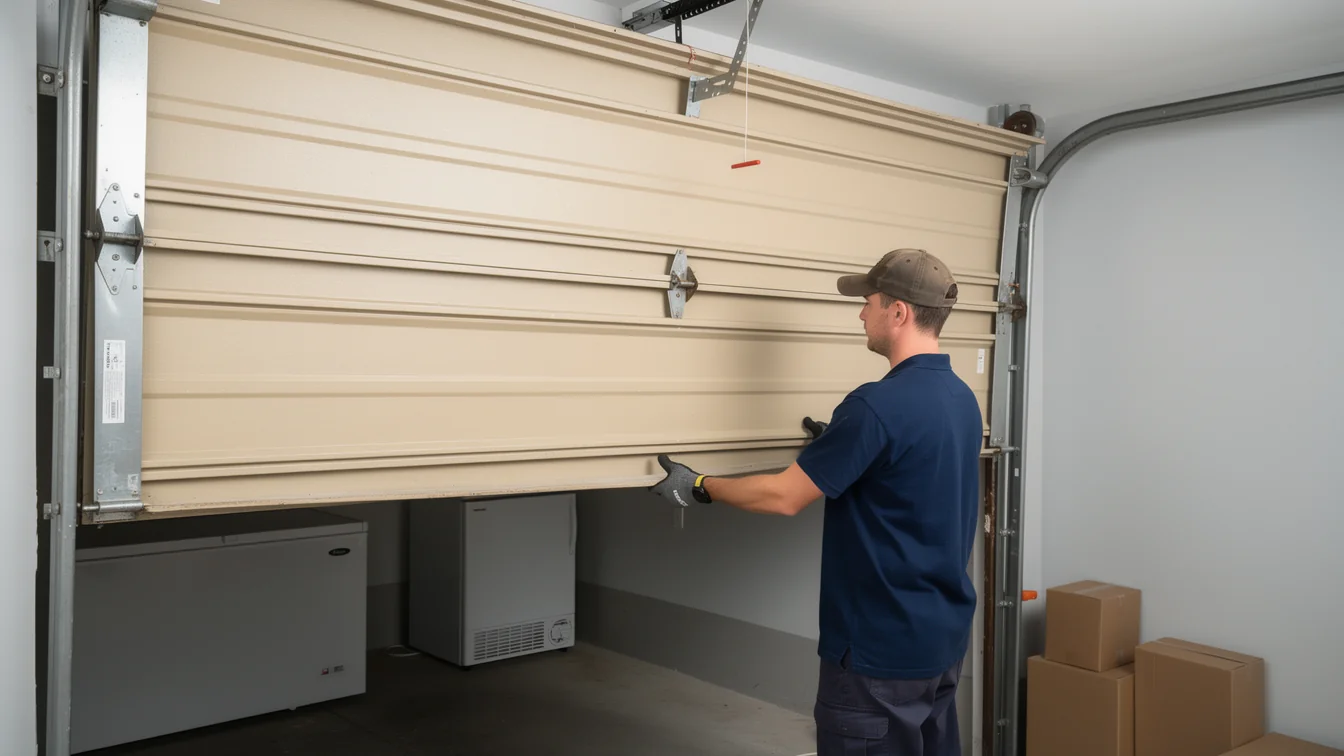
A White Bear Lake Garage Door Pros tech walks through the exact checks we run first, tied to this town's 1960s-70s housing stock and cold-climate wear on springs and tracks.
- Repairs & new doors
- Springs & openers
- Serving 7 nearby communities
When to Get Help
Call before the door stops working altogether. A door that's slow to close, that shudders halfway up, or that leaves a gap at the bottom corner is telling you something is already worn, not something that might fail someday. In a lot of the housing around White Bear Lake, built mostly between the 1960s and 70s with a median build year around 1976, the original torsion hardware on these doors is now 50-plus years old in a lot of cases. That's past the design life of most springs regardless of how the door looks from the driveway. If the opener strains, reverses on its own, or the door drops faster than it used to, that's a spring losing tension, not an opener problem. Don't wait for the cable to snap. We'd rather look at a door that's merely getting stiff than pull you out of a jammed one at 7 a.m. before work. One honest note: if a spring has already let go and the door is down, that's not a same-day DIY fix - the door is heavy enough to hurt someone, and that's exactly the kind of call where you want a second set of hands on site before you touch anything.
The Problem
The core issue in this area isn't bad installation - it's age catching up with original equipment. Houses here were built mostly 1950 through 2002, with the bulk of the stock from the 1960s and 70s. That means a large share of garage doors in White Bear Lake are still running on hardware sized for a lighter, single-layer door that's since been swapped for a heavier insulated replacement, or they're running the original springs that were never meant to last five decades. A technician's first move isn't to open the opener housing - it's to check the spring wind and the track alignment against what the door actually weighs now. Mismatched spring tension shows up as an opener that works too hard, which burns out the motor years before it should. We see this pattern often enough in this housing stock that it's usually the first thing we rule in or out, before touching anything electronic.
What the Weather Here Does to It
White Bear Lake sits in a cold, severe climate band, and that shows up in the garage door in specific ways. Steel contracts in deep cold, which tightens tolerances on tracks and rollers that were already fitted loose from age. A door that rolls fine in August can bind or jump the track in January on the same hardware, simply because the metal has shrunk a hair and the rollers no longer sit square. Lubricant that's fine in summer thickens and slows the rollers down, which the opener reads as resistance and compensates for by pulling harder - wearing the gear set faster. Cold also stiffens the rubber seal at the bottom panel, so on older doors from the 1960s-70s stock it can crack rather than flex, letting in drafts and water that then freezes against the bottom bracket. First check on any cold-weather call is always the bottom seal and the track gap, because both move differently than they did when the door was installed decades ago.
Checking It Yourself
Before you call, there's a short list worth running yourself, and it tells us a lot about what's wrong before we show up. Stand the door up by hand with the opener disconnected (pull the red release cord) - a door that's properly balanced should stay put at waist height on its own. If it falls or shoots up, the springs are off, and that's not something to adjust yourself. Look at the rollers for flat spots or rust, and check the bottom seal for cracking, especially on a door that's part of the older 1960s-70s stock common here. Listen for grinding versus popping; grinding usually means a roller or bearing, popping usually means a spring under uneven tension. What we don't recommend: adjusting the torsion spring winding bars yourself. The spring holds enough force to cause a serious injury, and that's the one job on this list we always say leave to us.
Frequently asked questions
Why does my garage door get harder to open every winter?
Cold contracts the steel track and stiffens the lubricant, which tightens the tolerance between roller and track right when the opener has the least extra power to push through it. In White Bear Lake's cold, severe climate, that seasonal swing is real and repeats every year, especially on older hardware.
My house was built in the 1960s - does that matter for my garage door?
It can. A lot of the housing stock here dates to the 1960s and 70s, and original torsion springs from that era are long past their rated cycle life even if the door still looks fine. Age on the spring, not the look of the panel, is usually what we check first.
Can I just add oil to a noisy door myself?
You can lubricate hinges and rollers with a light garage-door-specific lubricant, and that's safe to do. What's not safe is touching the torsion spring or its winding bars - that part holds enough stored force to cause serious injury and isn't a homeowner adjustment.
Related garage door services in White Bear Lake
More garage door guides
Book garage door service in White Bear Lake
Call now or request a quote - tell us what the door is doing and where you are.