
White Bear Lake, MN · Garage Door Service
What Makes an Old Garage Door Worth Fixing Here
White Bear Lake's housing stock runs 1950 to 2002, mostly 1960s-70s builds. Here's how to judge if your garage door is worth fixing in this cold climate.
- Repairs & new doors
- Springs & openers
- Serving 7 nearby communities
When to Get Help
If your door is slow to open, drops the last foot instead of settling, or the opener strains and reverses on its own, call before it fails outright. A lot of the housing around here went up between 1950 and 2002, with the bulk of it from the 1960s and 70s, which means a good share of doors still running are original or close to it. On those, a torsion spring that's lasted this long is living on borrowed time, and when it goes, it usually takes a cable or a bent track with it. Don't wait for the door to come off the rail to make the call. If you hear a loud bang from the garage, that's almost always a spring letting go, and the door should not be run again until someone looks at it. Minor stuff - a noisy roller, a sticking sensor - can wait for a scheduled visit. A door that won't stay up, or one that's suddenly heavier to lift by hand, can't.
The Problem
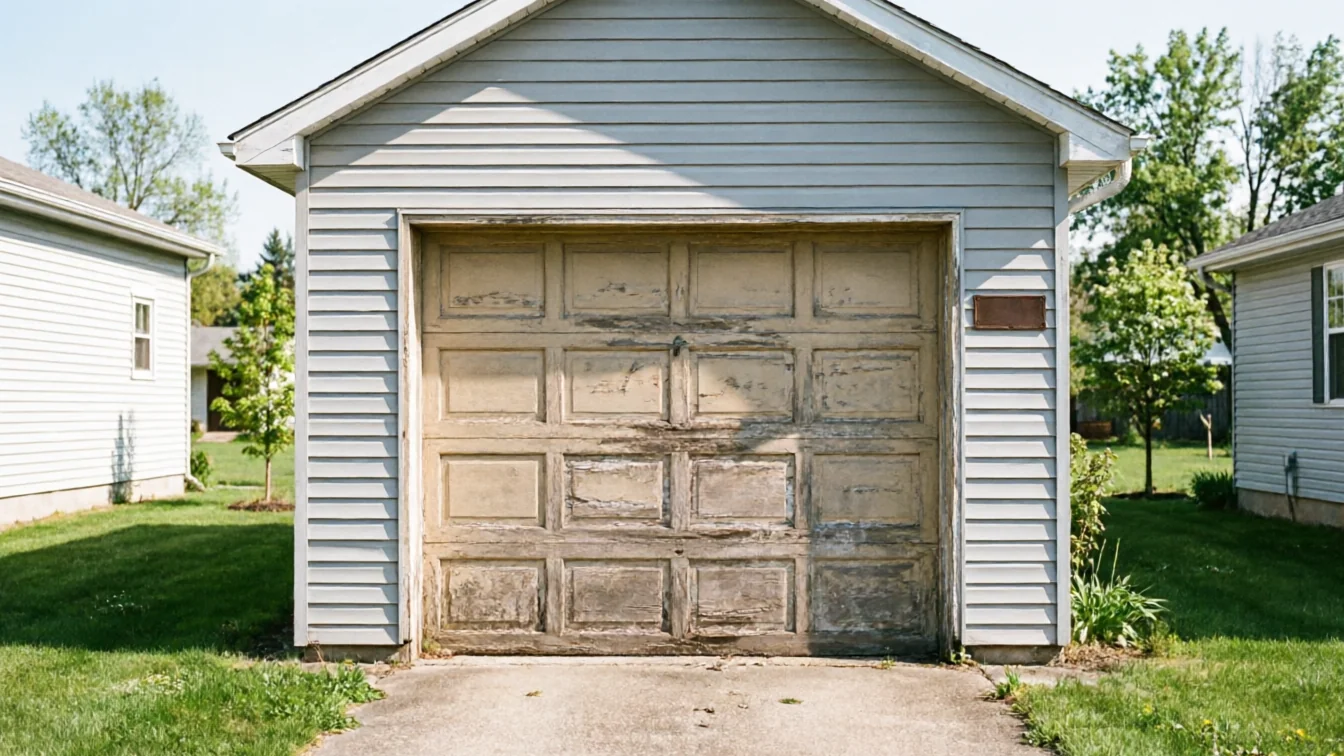
With housing stock this old concentrated across White Bear Lake and the surrounding area, a lot of doors are running hardware that nobody manufactures anymore - specific spring winds, obsolete track brackets, panel profiles that don't match anything on a current supplier's shelf. That's the real decision point on repair versus replace: it's not really about the door's age in years, it's about whether the parts still exist to fix it properly. A steel panel door from the 1970s can be perfectly serviceable if the track and springs are sound, but once the original rollers and hinges are worn past adjustment, you're often hunting for parts that have to be special-ordered, which adds time and cost that changes the math. We'll tell you straight when a repair isn't worth chasing - that's not a sales pitch, it's a respect-your-money call.
What the Weather Here Does to It
Cold here isn't mild cold - this area sits in a severe cold climate band, and that matters more to a garage door than most people think. Steel contracts in deep cold, which tightens tolerances on track alignment that was already marginal on an older door. Grease and lubricant on springs and rollers stiffen up in winter, so a door that's merely slow in July can bind or jump off track in January. Slab and footing movement from freeze-thaw cycles over decades can shift a garage's opening just enough to throw off a track that was plumb when it was installed in 1976. None of this shows up overnight - it's cumulative, which is exactly why doors built in that mid-century stretch are hitting failure points now, decades after installation, rather than all at once.
Checking It Yourself
Disconnect the opener and lift the door by hand, slowly, to the halfway point. If it stays put on its own, the springs are doing their job. If it drops or shoots up, that's spring tension out of balance, and it's not a DIY fix - torsion springs are under real load and we don't recommend touching them yourself. Look at the springs for visible gaps in the coil or rust pitting; on a door that's been through enough Minnesota winters, that's common and worth flagging. Check the cables at the bottom brackets for fraying. Run your hand along the track for rust or bent sections, especially near the bottom where road salt and snowmelt collect. If the door is original to a house built before the 1980s, it's also worth checking whether the panels still have intact insulation foam behind them, since that material does break down with age and affects more than the energy bill.
Frequently asked questions
How do I know if my garage door is too old to repair?
Age alone doesn't decide it - availability of parts does. If your door's hardware is specific to construction from the 1950s through the 1970s and the track or panel profile is no longer made, repeated repairs can cost more over a few years than replacing it once. We'll look at the actual wear and tell you honestly which side of that line you're on.
Why does my door act up more in winter?
This area sits in a severe cold climate band, and cold tightens steel tolerances, stiffens lubricant, and makes freeze-thaw ground movement worse. A door that's merely sluggish in warm months can bind or come off track once temperatures drop, especially if the track alignment was already marginal from age.
Is it normal for a 1970s door to still be original?
Yes - a lot of the housing in this area was built in that era, and plenty of doors from that period are still in service if the springs and track have been maintained. The question isn't the decade it was built, it's whether the specific hardware on it is still sound and serviceable.
What's one thing you won't do?
We won't talk you into replacing a door that just needs a spring or a cable. If the track and panels are sound, a repair is usually the honest call, and we'll say so even when replacement would be the bigger job for us.
Related garage door services in White Bear Lake
More garage door guides
Book garage door service in White Bear Lake
Call now or request a quote - tell us what the door is doing and where you are.