
White Bear Lake, MN · Garage Door Service
When a Spring Lets Go in the Cold
A broken torsion spring on a cold morning in White Bear Lake isn't random - it's 1960s-70s steel meeting a hard winter. Here's what to check and when to call.
- Repairs & new doors
- Springs & openers
- Serving 7 nearby communities
When to Get Help
If the door won't lift, or it lifts a few inches and stops, or you hear a bang from the garage overnight, that's a torsion spring giving out, not an opener problem. Call before you try to force the door up by hand or with the opener - a broken spring means the cable and drum are carrying weight they weren't built for, and the next failure can be the cable itself.
Most of White Bear Lake's housing went up between 1950 and 2002, with the bulk of it from the 1960s and 70s across the 37 named areas in town. That means a lot of original or first-replacement torsion springs are now 20, 30, even 50 years into service, sized for doors that are also decades old. A spring that's been wound and unwound tens of thousands of times doesn't need much of a cold snap to finish the job.
If you can still close the door and leave it down, do that and wait for help rather than running it on a broken spring. One cycle on a failed spring can bend a track or crack a panel, which turns a spring job into a bigger repair.
The Problem
Torsion springs fail by fatigue - they're rated for a number of cycles, and once they hit that number, cold weather is just the trigger that finishes them. Steel contracts as it gets colder, and the oil-tempered wire in an older spring gets more brittle right at the point it's already stressed from years of winding up and down.
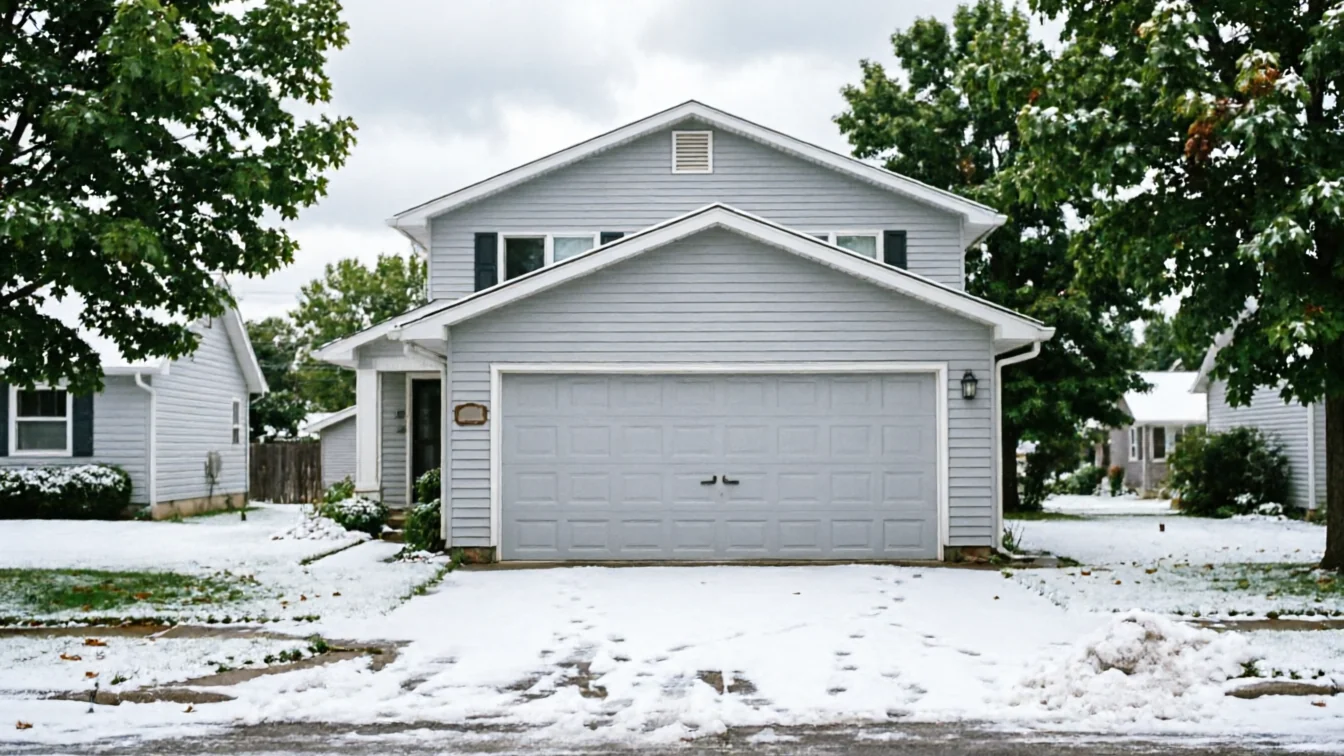
Houses from the 1960s and 70s stock that makes up most of White Bear Lake often still run on the single spring that came with the house, sized for a lighter door than some owners have since installed, or a door that's been repainted and now weighs more than it did new. Add 50-plus years of thermal cycling in a cold climate and you've got a spring that was always going to go eventually - the only question was which morning.
I won't pretend every spring failure is predictable. Some let go on a mild October afternoon with no warning at all. But the pattern in a town built mostly before 2002 is clear: older coil, more cycles, less margin when the temperature drops.
What the Weather Here Does to It
White Bear Lake sits in a cold-severe climate band, and that matters more for garage doors than people expect. Steel spring wire loses some flexibility as it gets cold, so the same stress that a spring shrugs off in July can be the one that snaps it in January. The failure isn't caused by the cold alone - it's the cold finding the weak point in a spring that was already near the end of its life from age and use.
Cold also affects the grease and lubrication on rollers and the torsion bar itself, making everything run stiffer right when the spring is under the most strain lifting a door that's heavier with frost or ice buildup at the bottom seal. That combination - an aging spring from this area's older housing stock, meeting a hard winter - is why spring calls cluster in the coldest months here.
There's not much you can do about the weather. What you can control is not waiting until the spring is visibly stretched or gapped before it's checked.
Checking It Yourself
You can look at the spring without touching it. Stand under the door with it closed and look at the torsion spring above the opening - if you see a gap in the coils, or one side looks stretched longer than the other, it's failing. Don't try to adjust or wind a torsion spring yourself; it's under enough tension to cause real injury, and that's true whether the spring is new or 40 years old.
A quieter check: pull the emergency release and lift the door by hand (only if it's fully down and you can do it safely). A door with a good spring should feel close to weightless and stay put partway up. If it feels heavy or drops on its own, the spring has already lost tension even if it hasn't snapped yet.
Given that most doors in this area are running springs that predate current build standards, a once-a-year visual check before winter is worth the five minutes. If you're not sure what you're looking at, that's a fair reason to have it looked at rather than guess.
Frequently asked questions
Why do garage door springs break more in winter here?
It's less about one cold night and more about age meeting cold. Most White Bear Lake homes have springs installed decades ago, and cold steel is more brittle under the same stress it handled fine in summer. The cold finishes off a spring that was already near the end of its cycle life.
Is it safe to open the door manually if the spring is broken?
You can pull the emergency release to disconnect the opener, but lifting a door with a broken spring is heavy and can be dangerous, especially on an older double door. If it won't lift easily, leave it down and get the spring replaced rather than forcing it.
My house is from the 1970s - should I replace the spring before it breaks?
If the spring looks stretched, gapped, or you can't remember the last time it was replaced, it's worth having it checked before winter. A lot of the original stock from that era is well past its expected cycle count.
Related garage door services in White Bear Lake
More garage door guides
Book garage door service in White Bear Lake
Call now or request a quote - tell us what the door is doing and where you are.